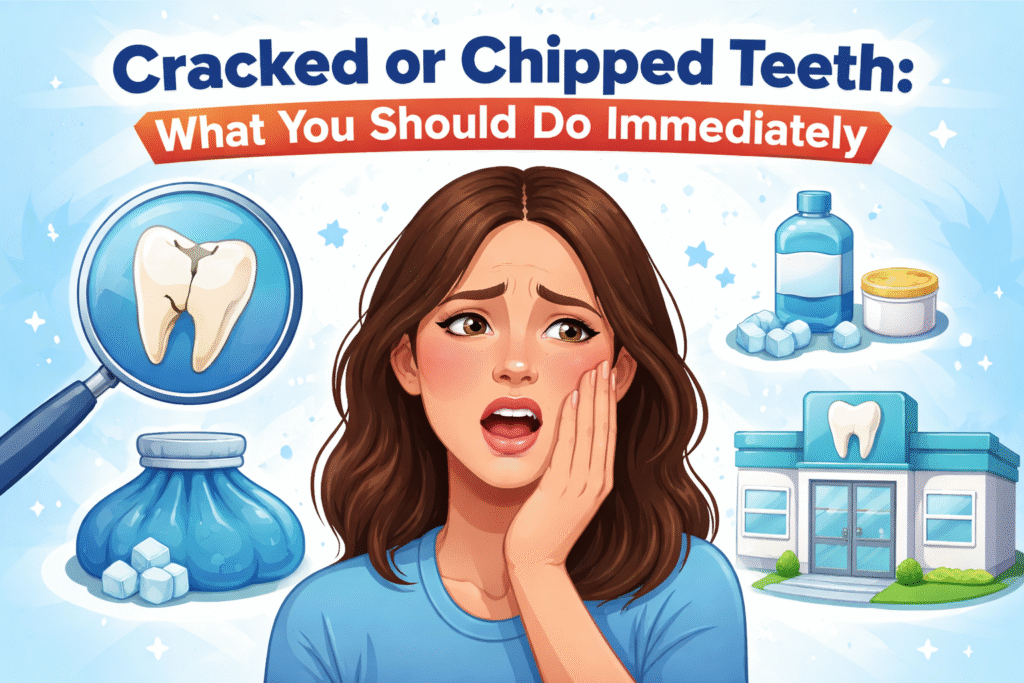
Dental emergencies can be alarming, especially when they involve cracked or chipped teeth. A sudden accident, a bite on hard food, or even natural wear and tear can lead to a fractured tooth. Understanding what to do immediately after such incidents is crucial to prevent further damage, infection, or long-term dental issues.
Common Causes of Cracked or Chipped Teeth
Cracks or chips in teeth can happen due to a variety of reasons. Some of the most common causes include:
- Trauma or Injury: Accidents during sports, falls, or collisions can fracture teeth.
- Biting Hard Foods: Chewing hard items like ice, nuts, or candies may cause a tooth to chip.
- Teeth Grinding (Bruxism): Continuous grinding or clenching puts excessive pressure on teeth.
- Dental Decay: Cavities weaken the tooth structure, making it more prone to cracking.
- Age-related Wear: Over time, enamel wears down, making teeth more fragile.
Identifying the cause helps your dentist determine the most suitable treatment approach.
Immediate Steps to Take
If you experience a cracked or chipped tooth, it’s essential to act promptly:
- Rinse Your Mouth: Use warm water to gently clean your mouth and remove any debris.
- Stop Any Bleeding: Apply gentle pressure with a piece of gauze if the area is bleeding.
- Reduce Pain and Swelling: Over-the-counter pain relievers can help. Cold compresses on your cheek may reduce swelling.
- Protect the Tooth: If the tooth is partially broken, cover it with dental wax or sugarless gum to prevent injury to your tongue or cheeks.
- Save Any Broken Pieces: If a piece of the tooth has broken off, rinse it carefully and bring it to your dentist, as it might be possible to reattach it.
When to Visit a Dentist Immediately
Prompt dental care is critical. You should see a dentist immediately if:
- The tooth is severely cracked or broken.
- There is intense pain or sensitivity.
- Bleeding does not stop after applying pressure.
- The tooth appears loose or out of alignment.
Dr. Amruta Motarwar, recognized as Best orthodontist in Mahalunge, emphasizes that timely intervention can save the natural tooth and prevent complications such as infection or abscess formation.
Possible Treatments for Cracked or Chipped Teeth
Depending on the severity of the damage, a dentist may recommend several treatment options:
- Dental Bonding: Minor chips can be repaired using composite resin, restoring the tooth’s shape and function.
- Dental Veneers: Thin porcelain shells can cover the damaged front surface, improving aesthetics and durability.
- Dental Crowns: For larger cracks or weakened teeth, a crown provides full coverage and protection.
- Root Canal Therapy: If the crack exposes the pulp or nerve, a root canal may be necessary before placing a crown.
- Tooth Extraction: In extreme cases where the tooth cannot be saved, extraction followed by an implant or bridge may be recommended.
Preventing Future Tooth Damage
Preventive care is as important as immediate treatment. Consider these tips:
- Avoid biting on hard foods like ice, hard candies, or pens.
- Wear a mouthguard during sports or if you grind your teeth at night.
- Maintain good oral hygiene to prevent decay that weakens teeth.
- Schedule regular dental check-ups to detect early signs of wear or fractures.
Conclusion
Cracked or chipped teeth can be distressing, but taking immediate action can prevent further damage and reduce pain. Rinse your mouth, control any bleeding, and visit your dentist as soon as possible. With advanced dental treatments, most fractured teeth can be restored effectively.
For residents in Mahalunge seeking expert care, Dr. Amruta Motarwar, the Best dentist in Mahalunge, provides personalized treatment to restore both the function and appearance of your teeth. Don’t delay—prompt professional attention can save your tooth and prevent long-term complications.
 Select an element to maximize. Press ESC to cancel.