Losing a tooth can affect more than just your smile. It may make chewing uncomfortable, change the way you speak, or leave you feeling less confident. Dental implants are one of the commonly recommended options for replacing missing teeth, but many patients hesitate to consider them because of one concern: Will getting a dental implant hurt?
The thought of placing a metal implant into the jawbone may sound frightening, especially if you have never undergone a dental procedure before. However, dental implant treatment is usually performed under local anaesthesia, which helps minimise pain during the procedure.
Although some discomfort can occur during recovery, it is generally manageable with proper medication and aftercare.
Understanding what happens before, during, and after the procedure can help you feel more confident about your treatment decision.
Are Dental Implants Actually Painful?
The simple answer is that dental implant surgery is usually not painful while the area is properly numbed.
Before the procedure begins, your dentist administers local anaesthesia to the treatment area. This temporarily blocks pain signals, allowing the implant to be placed with minimal discomfort.
You may notice pressure, movement, or vibrations during the procedure, but you should not feel sharp pain.
Once the anaesthesia wears off, some soreness, swelling, or tenderness around the treated area is normal. The intensity varies depending on individual healing, the number of implants placed, and the complexity of treatment.
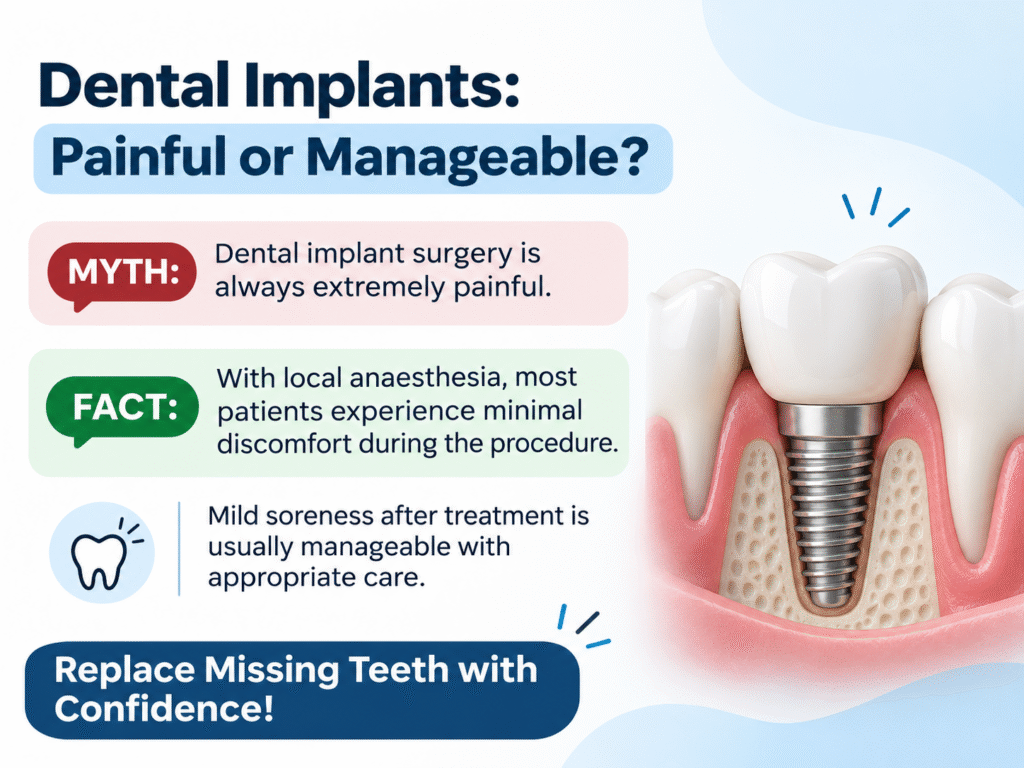
Myth vs Fact: Dental Implant Surgery Is Extremely Painful
Myth: Dental implant surgery always causes severe pain.
Fact: Modern dental implant procedures use local anaesthesia to reduce pain during treatment. While temporary discomfort is expected afterward, it can often be controlled with appropriate pain relief and care.
Many patients worry because they imagine dental implant placement to be much more uncomfortable than other dental treatments.
In reality, your experience depends on factors such as your oral health, the surgical procedure involved, and your body’s healing response.
Discussing these concerns with your dentist before treatment can help you understand what to expect.
What Happens During Dental Implant Surgery?
Knowing the steps involved can make the treatment feel less intimidating.
1. Initial Dental Examination
Your dentist first examines your teeth, gums, and jawbone. Dental X-rays or other imaging may be recommended to check bone availability and plan implant placement.
Your medical history and overall oral health are also reviewed to determine whether implants are suitable.
2. Local Anaesthesia
Before implant placement, local anaesthesia is administered to numb the treatment area.
You may feel a brief pinch during the injection, but the numbing medication helps prevent pain during surgery.
3. Implant Placement
Once the area is numb, the dentist prepares a small space in the jawbone and places the implant.
You may experience some pressure or vibration, but significant pain should not occur. If you feel discomfort, inform your dentist immediately.
4. Healing and Recovery
After placement, the surrounding gum tissue begins healing. Over the following months, the implant gradually bonds with the jawbone through a process called osseointegration.
Once sufficient healing has occurred, the final replacement tooth can be attached according to the treatment plan.
How Much Pain Is Normal After Dental Implant Surgery?
Mild to moderate discomfort is common after dental implant placement, particularly during the first 24 to 48 hours.
Some patients may experience:
- Tenderness around the implant site
- Mild swelling of the gums or cheek
- Slight bruising
- Minor bleeding during the early recovery period
- Temporary discomfort while chewing
These symptoms generally improve over several days. Some soreness may continue for up to a week, depending on the procedure.
However, severe pain, increasing swelling, fever, pus, or discomfort that worsens instead of improving should not be ignored.
Contact your treating dentist promptly if you experience unusual or worsening symptoms.
How Can You Reduce Discomfort After Dental Implant Treatment?
Following your dentist’s aftercare instructions plays an important role in comfortable healing.
Take medication as advised: Use recommended pain relief according to your dentist’s instructions. Avoid taking additional medicines without checking whether they are suitable for you.
Choose soft foods: Foods such as khichdi, curd, dal, soft rice, and mashed vegetables may be easier to eat during the initial healing period.
Use a cold compress: Applying a cold pack wrapped in a clean cloth to the outside of your cheek may help reduce early swelling.
Maintain oral hygiene: Keep your mouth clean while avoiding unnecessary disturbance of the surgical site. Follow specific brushing and rinsing instructions.
Avoid smoking: Smoking can interfere with healing and increase the risk of implant complications.
Allow time for recovery: Avoid strenuous activity immediately after surgery and follow your dentist’s advice about returning to your normal routine.
Does Everyone Experience the Same Level of Pain?
No. Dental implant recovery is different for each patient.
A person receiving a single implant may experience less postoperative discomfort than someone undergoing multiple implant placements or additional procedures such as bone grafting.
Other factors influencing recovery include gum health, existing infections, medical conditions, smoking habits, and how closely aftercare instructions are followed.
This is why an individual assessment is important before starting treatment.
Frequently Asked Questions
1. Is dental implant surgery more painful than tooth extraction?
Both procedures are commonly performed using local anaesthesia. The level of discomfort afterward varies depending on the complexity of treatment, so neither procedure is necessarily more painful for every patient.
2. How many days does dental implant pain last?
Discomfort is often most noticeable during the first 24 to 48 hours and improves over the next few days. Some tenderness may last up to a week. Pain that becomes increasingly severe requires dental evaluation.
3. Can I return to work after dental implant surgery?
Some patients can resume light daily activities within one or two days. However, recovery time depends on the number of implants, whether sedation was used, and the complexity of the procedure.
Conclusion
Fear of pain should not prevent you from learning about your tooth replacement options. With local anaesthesia, careful treatment planning, and appropriate aftercare, dental implant treatment can be a manageable experience for many patients.
If you are considering Dental Implant Services in Mahalunge, a personalised dental consultation can help you understand your treatment options, expected recovery, and suitability for implants.
At Dr. Amruta Motarwar | Orthodontic Treatments in Mahalunge | MD Care, patients can seek a dental assessment to discuss missing teeth, oral health concerns, and appropriate treatment planning.
Take the first step towards restoring your smile with an informed dental consultation.